Showing posts with label representation. Show all posts

10.4.17

REPRESENTATION: Gender in the media

OVERWATCH
VIDEO GAME (2016)
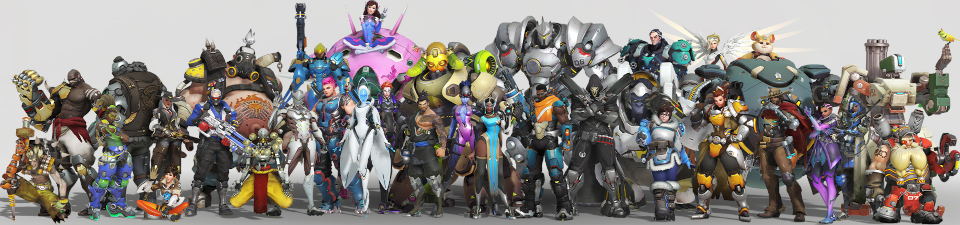
Overwatch is an online-multiplayer video game that pits one team against another in a battle for the most kills. Users play as set characters (known as 'heroes') that have abilities specific to a certain type of combat. For example, the hero Ana is a sniper and a healer so she would be suited to those who prefer to stay further away from the action, while Tracer specialises in fast and close-combat which is useful for players who like a bit more excitement. 24 heroes are currently available to play in Overwatch, with 11 of those being female. A common stereotype in these online-multiplayer games is that female characters will often be pushed into a support role, such as a healer, who does not take much part in combat. While Overwatch has its fair share of female support heroes, there are plenty of other roles that the women take that defy these stereotypes. For example, the hero Zarya is a large, muscular character from Russia and has abilities that classify her as a tank. This means that she has a lot of health and can withstand more damage before dying. This role is often reserved only for male characters due to its connotations of masculinity, but the amount of female tanks in the game is exactly equal to the number of male ones.
One issue that this game has in terms of gender representation is the skimpy and figure-hugging attire of some of the heroes such as Widowmaker and Tracer, however this is balanced out by the majority of female heroes being dressed in more realistic armour.

THE REVENANT 
MOVIE (2015)
Image result for the revenant
The Revenant was a film made in 2015 that takes inspiration from a man named Hugh Glass who fought for his survival after being gravely injured by a bear on a fur trading expedition in the 1820's. One of the movie's main plotlines is the theme of men doing whatever's necessary to protect the thing they cherish most in the world and dying in the process. Glass, played by Leonardo DiCaprio, risks life and limb to avenge his son's death at the hands of his coworker Fitzgerald before he finally succumbs to his wounds. Tom Hardy's portrayal of John Fitzgerald is so desperate for money and wealth, only to meet the same fate as those he murdered in order to achieve said wealth. Finally, Domhnall Gleeson's Andrew Henry seeks to deliver justice against Fitzgerald for his crimes but meets an untimely end from the very man he was seeking. This same need for justice prompted Henry to feel reluctant about leaving Glass to die after he was attacked by a bear. These three stories represent different paths that people of the same gender took that all lead to death.
It could be argued that, since this movie was set in the 1820's, it would be factually inaccurate to include any multi-dimensional female characters in The Revenant. This being said, the only female characters that exist in this movie are solely to advance the plot of the main male characters. Glass's deceased wife acts as a guide and encouragement to him during his difficult journey through his memories of her. The practice of killing off, or otherwise severely harming, characters for the advancement of another character is known as fridging, and is often reserved for females. Another example of this in The Revenant is when Glass finds Powaqa being raped by French hunters. Her rape is an excuse to show Glass's humanity and compassion when he kills her attacker. The only bit of agency she has is when she threatens to cut her rapist's testicles off, but only after Glass has freed her. Even when it's revealed to the audience that Powaqa has come home safe to her family, she is still shown as under the instruction of her father.

23.1.17

REPRESENTATION: Older people

APPLE TREE YARD 
(TV SERIES - BBC ONE)


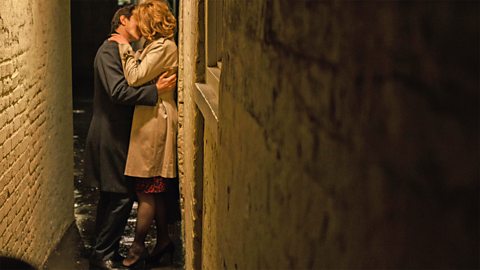
Apple Tree Yard is a 2017 television series with a plot that's been described as, 'a provocative thriller which sees an eminent scientist caught up in a damaging and compromising lie', and is based on a book of the same name. In the first episode, the middle-aged female lead begins an affair with a stranger which leads to some risque scenes. Older women aren't often allowed to embrace their sexuality in the same way that younger women might and this is largely due to the messages encoded within the media and advertising that surrounds us. No matter the gender you are, to get older is often synonymous with feelings like running out of time, losing your beauty, or becoming outdated and irrelevant. Casting directors will tend to look for younger actors in these sorts of roles to satisfy an audience that they feel is superficial and ageist, while simultaneously being superficial and ageist themselves for pushing this ideal. Seeing a mature woman, and also a mature man, in these kinds of contexts encourages women of a similar age that sex doesn't have to end after the age of thirty, and that age alone is not a quality that could make someone undesirable. 

PASSPORT TO ETERNITY: PHOTOGRAPHING THE FORGOTTEN ELDERLY OF UKRAINE 
(ARTICLE - THE GUARDIAN)


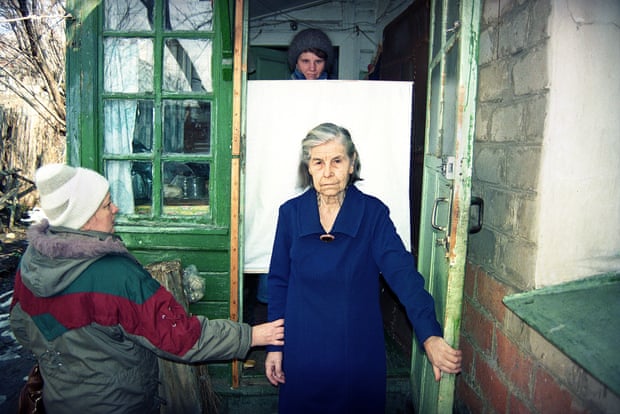
After Ukraine left the Soviet Union in the 1990's, it was required for all citizens to procure a new passport for themselves. Everyone needed a new passport photo and local photographers were more than happy to cater for this new demand. The article tells how one of these photographers, Alexandr Chekmenev, accepted the job to take photos for the older and more vulnerable population of the country for very little pay. He explains that, after seeing the terrible living conditions that these people were subject to, he was willing to take pictures for free.
The article and the portrait series that evolved from his pictures paint a story of how terribly the elderly are treated in Ukraine and in other places around the world. Although conditions such as these are rare in this country, we can draw some unsettling similarities. One woman who was photographed lived alone in a two-room house where she had prepared a coffin for herself in one room and a bed in the other. She seemed to believe that the amount of time that she had left was proportionate to her worth, and therefore spent the rest of her days simply waiting to die. We often hear of the elderly people in our country having no family or friends to turn to, so much so that there are charities dedicated to finding companionship for those people. The article has an air of hopelessness about it which is used to both inform and evoke an emotional reaction from the audience. It shows the elderly as a group of people who cannot fend for themselves and need assistance in order to live happily.

10.10.16

REPRESENTATION: Women vs. Men

No one can argue that there isn't a distinct difference in the way that organisations advertise to men and women. The age-old stereotype that pink and dolls are for girls, and that blue and manual labour are for boys, is ingrained in us daily through the use of advertisement. It can be subtle enough that we don't notice it but, after doing some critical thinking, we can begin to see just how much effect that advertising has on our views of different groups of people. In class, we were tasked with analysing two different television commercials - one aimed at men, and one aimed at women - in order to try to distinguish these distinct differences.

20.9.16

H&M New Autumn Collection 2016


H&M released an advert for their new autumn clothing collection very recently. On first watching, we can already see that this piece is amazing in terms of positive representation of women. From the diversity of the models used to the portrayal of women in comfortable and empowering environments, this advert positively screams of girl power. It was incredibly refreshing to see an ad that was completely for, and about, women.

13.9.16

Portrayal of Women Within The Media


The image on the left shows an example of a print advert that was around during the 1950s. It shows a woman with a surprised look on her face next to a bottle, with the caption, ‘You mean a woman can open it?’ The image below is of a woman with wide-eyes and a bitten lip clutching a steering wheel in a print advert for the Mini Automatic during the 1970s. The caption reads, ‘The Mini Automatic. For simple driving.’